
In his walkthrough for Batman: Arkham Asylum published by Rock Study, Chris outlined how the design excellently blended the compelling story with the various game mechanics. The underlying plotline of the Joker releasing all of Batman's enemies from Arkham Asylum for him to capture and defeat once more drives the action, and the story seems faithfully reproduced from the cartoon series, making it a joy for old and new fans alike to play.
The graphics are impressive, placing slightly stylized, yet realistic looking character models into a slew of dark, gritty, nonlinear environments. The combat system seamlessly incorporates time-sensitive button mashing with stunning, slow-motioned visuals of Batman's powerful kicks, punches, and chokeholds, and the Unreal and Chaos engines used in the design lend satisfying ragdoll effects to the enemies.
In addition to Batman's successively growing arsenal of deadly weapons, picked up as rewards throughout the game, the player is given access to a bunch of useful gear to help navigate dynamic levels; players can scale walls with a grappling hook or swoop down on unsuspecting baddies using Batman's cape-turned-glider, allowing the player to develop their own fighting tactics using their environment. The platforming is just as engaging as the fight sequences, often blending hand to hand combat, exploration, and the masked hero's stealthy side in detective mode, or when the player chooses to have Batman perform silent takedowns of his enemies instead of merely barging in, guns blazing so to speak (or in this case, fists?). Collectively, the wide range of options offered to interact with the game environments keep the action from ever being redundant, and maintain replay value even after the game has been beaten once.
The player character isn't static either, as Batman sports more visible cuts and bruises and picks up upgrades and different weapons as the game progresses. The game world is as successfully atmospheric as those in the Bioshock or Prince of Persia titles, and enriching sidequests such as the trail of clues left by the Riddler encourage the player to venture from the more linear, main plot sequence to explore the limits of their environment.
Conducive with the immersive setup, the actual gameplay experience is interrupted only by a loading screen, the occasional map, and verbal cues said by Batman himself to offer valuable hints as to what the next goal is to keep the player from getting lost or confused too often.
Wednesday, September 30, 2009

Wednesday, September 23, 2009
Game Walkthrough Analyses: I

In his analysis of the Playstation 3 hit, God of War II, Jimmy focused on how the developers used the element of scale to effectively create an original, thrilling gameplay environment. Using perfectly picked examples of epic boss battles, and clips showcasing the game's seamlessly blended fighting and platforming, he demonstrated integrating extreme scale differences into GoW brought to life the mythology-based storyline and more than made up for the unusually short game length.
Kratos, the game's hero, uses the blades chained to his wrists not only for hacking and slashing, but to navigate his environment as he swings from one platform to another and scales walls like a mountain climber with an ice pick. This feature is particularly useful with the game's massive baddies, since Kratos must first attack his foes from lower ground before actually climbing up Atlas' monstrous hand to place the finishing move or slashing at the midsection of a Colossus before climbing up his arm.
This evokes the same scaling aspect that made the Prince of Persia, or Legend of Zelda games such a pleasure to play- while the environments in GoW II seem more linear than the expansive Ocarina of Time map, or the elaborate, dynamic, interlinked rooms in Warrior Within, all of these games successfully immerse the player in organic, sprawling settings, easily viewable by cinematic camera angles. The God-sized GoW enemies specifically remind me of some of the boss battles in OoT and Twilight Princess (ex. giant Ganondorf, the lava dragon Volvagia, and the titanic Morpheel) as well as the trolls in WW, and the Hellish gladiator creature or the final battle with the evil, super-sized vizier the Prince faces in The Two Thrones.
Sunday, April 19, 2009
Game Essentials Overview: Room for Improvement?
Even when failures don't easily come to mind when thinking of a game as enjoyable as these, there's always room for improvement. Besides the unavoidable slew of occasional bugs and glitches innately found in Twilight Princess and the Prince of Persia games, each have their fundamental design failings.
Twilight Princess alone is hard to find fault with, besides the storyline which is initially similar to its predecessors that may be just as easily redundant as it is familiarly enjoyable to fans of the older Ocarina of Time and other Zelda games.
The limited audio of the game are definitly notable though, since the various charcters throughout Hyrule still appear voiceless as all dialogue and explanations are presented in text form only. The deisngers could easily have employed that capability but for whatever reason chose not to accompany the updated graphics and extended scope of the game with new in-game dialogue and voiceover additions as well. Even the sound capability that Nintendo added to the Wii controller is also a design flaw in my opinion- the sound quality is poor and annoyingly tinny, and while the idea of having Link's yells, sword clashes, and certain sound cues like the melodic opening of a door come from the controllers itself might be good in theory, the actual implementation of it is ultimately distracting and detracts from the immersiveness of the game whenever the player hears half of the key sounds coming from their hands and not echoing from the room around them.
Additionally, the hearing impaired players might run into trouble during the few sections where sound is helpful or even essential to gameplay, for example when Link must follow the music through winding forest paths to find the Master Sword.
The motion-sensitive manual interface of the Wii is another feature with its own cons as well as pros; while the controllers allow more physical involvement and command over the myriad of items and long-range weapons than the Gamecube or N64 consoles could ever offer the Zelda franchise, it might make more sense and make gameplay more fun if the direction of the player's Wiimote motions actually corresponded with Link's swordstrokes.
Turning a critical eye to all three Prince of Persia titles , more flaws are naturally noticeable, perhaps in part because Ubisoft didn't quite have the option of following as popular a tried-and-true blueprint as Twilight Princess had to build off of. The Sands of Time that generated more than a little acclaim in its own right, was named Game of the Year in 2003, and is arguably the best designed title of the trilogy I've examined here, still leaves room for one or two improvements; the character models aren't exactly incredibly high polygon, although the textures and animations used do compensate for their limited realism. Besides that, the visuals are stunning, even by today's standards in my experience. The implicit challenge level of some boss battles could be questioned too, and the limited combat options definitely get repetitive after repeating the same 4 or 5 moves throughout the game.
Warrior Within elicited widespread criticism from many fans of the first game, namely for its sudden directional change and accompanying deviation from the more likeable, innocently arrogant Prince to make way for a darker, tougher, selfishly-motivated warrior. I enjoyed this game as much or more than the first one however, although I did notice a few new features that bothered me. Although the backtracking through previous environments perhaps was intended to be more immersive than the sometimes unnaturally linear gameplay of Sands, it pushed the explicit challenge of navigating the extensive environments with an entirely useless minimap menu to a level that was downright confusing and frustrating at times. The intentionally darker, almost obnoxiously moodier feel of the game overall would likely anger fans if they didn't take it as an entirely different game altogether, but even with such acceptance, the less-than stellar voice acting (Favorite line: "You BITCH!" Or was it "Who do you think you are??" - "I am the Prince of Persia!" No shit, Sherlock. Guess he still doesn't have a name) seemed cheesy and idiotic, a far cry from the charming banter in Sands of Time.
The Two Thrones seeks to combine the best of its two predecessors, returning to the simpler storyline and more linear gameplay of SoT with the visual vengeance and free-form combat system of WW. Its few flaws then, are naturally a decrease in breadth and content from the previous title, as well as more limited explicit and implicit challenges- it sought to replace the puzzles and strategy the first two titles possesed with more action and fighting, although even the exciting chariot races and boss battles seemed a little too easy.
Twilight Princess alone is hard to find fault with, besides the storyline which is initially similar to its predecessors that may be just as easily redundant as it is familiarly enjoyable to fans of the older Ocarina of Time and other Zelda games.
The limited audio of the game are definitly notable though, since the various charcters throughout Hyrule still appear voiceless as all dialogue and explanations are presented in text form only. The deisngers could easily have employed that capability but for whatever reason chose not to accompany the updated graphics and extended scope of the game with new in-game dialogue and voiceover additions as well. Even the sound capability that Nintendo added to the Wii controller is also a design flaw in my opinion- the sound quality is poor and annoyingly tinny, and while the idea of having Link's yells, sword clashes, and certain sound cues like the melodic opening of a door come from the controllers itself might be good in theory, the actual implementation of it is ultimately distracting and detracts from the immersiveness of the game whenever the player hears half of the key sounds coming from their hands and not echoing from the room around them.
Additionally, the hearing impaired players might run into trouble during the few sections where sound is helpful or even essential to gameplay, for example when Link must follow the music through winding forest paths to find the Master Sword.
The motion-sensitive manual interface of the Wii is another feature with its own cons as well as pros; while the controllers allow more physical involvement and command over the myriad of items and long-range weapons than the Gamecube or N64 consoles could ever offer the Zelda franchise, it might make more sense and make gameplay more fun if the direction of the player's Wiimote motions actually corresponded with Link's swordstrokes.
Turning a critical eye to all three Prince of Persia titles , more flaws are naturally noticeable, perhaps in part because Ubisoft didn't quite have the option of following as popular a tried-and-true blueprint as Twilight Princess had to build off of. The Sands of Time that generated more than a little acclaim in its own right, was named Game of the Year in 2003, and is arguably the best designed title of the trilogy I've examined here, still leaves room for one or two improvements; the character models aren't exactly incredibly high polygon, although the textures and animations used do compensate for their limited realism. Besides that, the visuals are stunning, even by today's standards in my experience. The implicit challenge level of some boss battles could be questioned too, and the limited combat options definitely get repetitive after repeating the same 4 or 5 moves throughout the game.
Warrior Within elicited widespread criticism from many fans of the first game, namely for its sudden directional change and accompanying deviation from the more likeable, innocently arrogant Prince to make way for a darker, tougher, selfishly-motivated warrior. I enjoyed this game as much or more than the first one however, although I did notice a few new features that bothered me. Although the backtracking through previous environments perhaps was intended to be more immersive than the sometimes unnaturally linear gameplay of Sands, it pushed the explicit challenge of navigating the extensive environments with an entirely useless minimap menu to a level that was downright confusing and frustrating at times. The intentionally darker, almost obnoxiously moodier feel of the game overall would likely anger fans if they didn't take it as an entirely different game altogether, but even with such acceptance, the less-than stellar voice acting (Favorite line: "You BITCH!" Or was it "Who do you think you are??" - "I am the Prince of Persia!" No shit, Sherlock. Guess he still doesn't have a name) seemed cheesy and idiotic, a far cry from the charming banter in Sands of Time.
The Two Thrones seeks to combine the best of its two predecessors, returning to the simpler storyline and more linear gameplay of SoT with the visual vengeance and free-form combat system of WW. Its few flaws then, are naturally a decrease in breadth and content from the previous title, as well as more limited explicit and implicit challenges- it sought to replace the puzzles and strategy the first two titles possesed with more action and fighting, although even the exciting chariot races and boss battles seemed a little too easy.
Sunday, April 12, 2009
Game Essentials Overview: Success?
In review, both Twilight Princess and Prince of Persia games successfully immerse the player in the game world and play experience by effectively implementing rules, challenges, level design, visuals, audio, and an excellent story and cast of characters.
Both games make sure to set enough limiting parameters and guiding rules so that the player isn't totally lost in figuring out what the point of the game is or how to play, while still leaving enough mystery and content for the player to explore on their own so that the player doesn't get bored quickly. Both are sure to clearly define victory conditions, such as defeating an enemy, completing a subquest, unlocking a door to access another level, or even ultimately killing the final baddie responsible for the protagonist's strife. They also make sure the player is aware of loss conditions, such as letting your health run out while fighting minions or evading traps, falling from a ledge, or allowing an enemy to capture or kill an ally.
Various goals are set to guide the player's actions and provide a challenge, including puzzle-solving, combat, exploration, and advancement. Challenges faced in each game are implicit and explicit, that is intentional and immediate or emergent through gameplay itself, which helps create a more interesting and varied play experience. Implicit challenges like defeating different enemies using a series of swordstrokes, acrobatics, and evasion tactics, or having to guide Link or the Prince through deadly traps or a winding dungeon are obviously entertaining in the first place, but having to figure out which passage leads to somewhere I've already been before, deciding which door I need to go through first, or realizing I need to use Link's iron boots to traverse the magnetic deposits on the walls and ceilings of the Goron Mines adds another element of fun and discovery.

The levels of each game seem for the most part to be expertly designed in my experience- I can't recall being bored by any particular part of either game, although I may have gotten frustrated by an especially confusing setting or tricky fight on more than one occasion; levels were geared towards accomplishing the current goal, and usually ideally balanced the time spent completing them with the amount of content found throughout them- I'd spend just about the number of minutes I had patience for completing a task or defeating an enemy, and just about the amount of effort I wanted to expend to find doors, hidden objects, powerups, and other bonuses in the levels before I lost interest. The settings were varied and interactive enough to convince me in the moment that it was real and significantly natural which accentuated the rich story and world of each game. It was up to me whether I wished to race through a series of cleverly integrated ropes, ladders, and platforms, slip past any enemies I didn't need to confront, and breeze through required quests/tasks to finish the level, or whether I wanted to take my time exploring environments, looking for hidden rewards in a cracked wall or treasure chest, talking to non-essential characters, completing subquests, and "playing" with my enemies using attractive but probably unnecessary fighting combos.
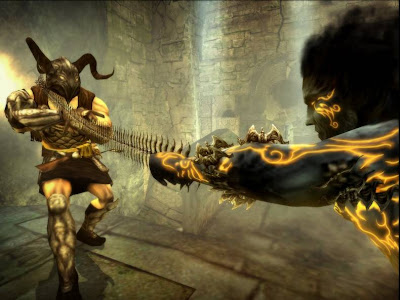
The visuals and audio of each game were also superb- The environments blended realistic textures and lighting with a more fantastical layout and ambiance. Although the Twilight Princess graphics were a little more stylized and less realistic than those for the Prince of Persia games, each created the sense that this was a living, breathing realm of its own. Painstaking details in each like the wandering cats and dogs in the streets of Hyrule Castle town or the weapons that can be picked up and used once a weapon rack has been smashed in any of the last two PoP games made each world all the more believable.
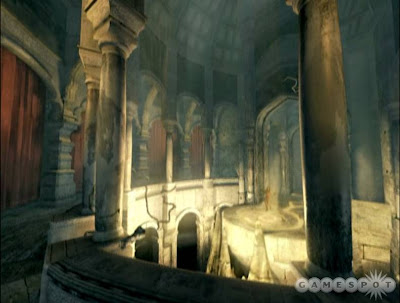
The original soundtracks for each added even more to the pleasantly complex gameplay, and there seemed to be realistic sounds for any event imaginable, such as the thud and resounding clanging when Link hits a bucket-headed training dummy with his sword, lights a torch, barks in wolf form at an opponent, or when the Prince cracks open a wall with his sword, pulls a rusty lever, or rolls over smooth flagstones. The voiceovers in the PoP games are decently executed and expressive as well, and help to enrich the story and the general mood of the game as well.
Both series are definitely notable for their memorable characters and compelling storylines, and while each utilized the age-old model of the Hero's Journey Joseph Campbell observed, neither plotline was boring or too cliche. The character development that emerges through the Prince and Farah's entertaining interactions in the SoT is distinctly charming, and the developers did a good job of evolving the Prince's more mature character to fit the changing feel of the following games. Twilight Princess Link is the same, quietly humble farmhand turned fierce and dedicated warrior he's always been, but he's still easy to identify with and sympathize with throughout the story.
Both games make sure to set enough limiting parameters and guiding rules so that the player isn't totally lost in figuring out what the point of the game is or how to play, while still leaving enough mystery and content for the player to explore on their own so that the player doesn't get bored quickly. Both are sure to clearly define victory conditions, such as defeating an enemy, completing a subquest, unlocking a door to access another level, or even ultimately killing the final baddie responsible for the protagonist's strife. They also make sure the player is aware of loss conditions, such as letting your health run out while fighting minions or evading traps, falling from a ledge, or allowing an enemy to capture or kill an ally.
Various goals are set to guide the player's actions and provide a challenge, including puzzle-solving, combat, exploration, and advancement. Challenges faced in each game are implicit and explicit, that is intentional and immediate or emergent through gameplay itself, which helps create a more interesting and varied play experience. Implicit challenges like defeating different enemies using a series of swordstrokes, acrobatics, and evasion tactics, or having to guide Link or the Prince through deadly traps or a winding dungeon are obviously entertaining in the first place, but having to figure out which passage leads to somewhere I've already been before, deciding which door I need to go through first, or realizing I need to use Link's iron boots to traverse the magnetic deposits on the walls and ceilings of the Goron Mines adds another element of fun and discovery.

The levels of each game seem for the most part to be expertly designed in my experience- I can't recall being bored by any particular part of either game, although I may have gotten frustrated by an especially confusing setting or tricky fight on more than one occasion; levels were geared towards accomplishing the current goal, and usually ideally balanced the time spent completing them with the amount of content found throughout them- I'd spend just about the number of minutes I had patience for completing a task or defeating an enemy, and just about the amount of effort I wanted to expend to find doors, hidden objects, powerups, and other bonuses in the levels before I lost interest. The settings were varied and interactive enough to convince me in the moment that it was real and significantly natural which accentuated the rich story and world of each game. It was up to me whether I wished to race through a series of cleverly integrated ropes, ladders, and platforms, slip past any enemies I didn't need to confront, and breeze through required quests/tasks to finish the level, or whether I wanted to take my time exploring environments, looking for hidden rewards in a cracked wall or treasure chest, talking to non-essential characters, completing subquests, and "playing" with my enemies using attractive but probably unnecessary fighting combos.

The visuals and audio of each game were also superb- The environments blended realistic textures and lighting with a more fantastical layout and ambiance. Although the Twilight Princess graphics were a little more stylized and less realistic than those for the Prince of Persia games, each created the sense that this was a living, breathing realm of its own. Painstaking details in each like the wandering cats and dogs in the streets of Hyrule Castle town or the weapons that can be picked up and used once a weapon rack has been smashed in any of the last two PoP games made each world all the more believable.

The original soundtracks for each added even more to the pleasantly complex gameplay, and there seemed to be realistic sounds for any event imaginable, such as the thud and resounding clanging when Link hits a bucket-headed training dummy with his sword, lights a torch, barks in wolf form at an opponent, or when the Prince cracks open a wall with his sword, pulls a rusty lever, or rolls over smooth flagstones. The voiceovers in the PoP games are decently executed and expressive as well, and help to enrich the story and the general mood of the game as well.
Both series are definitely notable for their memorable characters and compelling storylines, and while each utilized the age-old model of the Hero's Journey Joseph Campbell observed, neither plotline was boring or too cliche. The character development that emerges through the Prince and Farah's entertaining interactions in the SoT is distinctly charming, and the developers did a good job of evolving the Prince's more mature character to fit the changing feel of the following games. Twilight Princess Link is the same, quietly humble farmhand turned fierce and dedicated warrior he's always been, but he's still easy to identify with and sympathize with throughout the story.
Sunday, March 29, 2009
Game Essentials: Audio
A key factor in fully immersing the player in a game is including appropriate audio. Music will help enhance the playing experience, while background noise and sound effects provide ambiance and believability. Audio can also provide feedback and cues to the player.
The audio in Twilight Princess and Prince of Persia is just as rich and layered as the graphics and gameplay themselves; the inclusion of background sounds such as the distant rush of running water or tranquil birdcalls in Link's Ordon Village, or the echoing howl of wind and dripping water heard as the Prince navigates an underground cavern makes each world more realistic, and help to set the scene.
------------------------------------------------------------------------------------------------------------
Event-based sounds offer feedback to actions the player takes, or may provide audio cues. Walking over grass or stone in Twilight Princess will elicit squishing, crunching, or hollow tapping sounds, adding another dimension of realism to the visual environment. Link's signature "Heeyah!" yells and grunts when fighting, lifting rocks, or rolling add character, while the "thunk" or clanging sounds heard when he hits a tree or rock with his sword breathe life into the game world whenever the player reacts with it.
The Prince's fierce Warrior Within roars and injured grunts he makes when struck again enhance the character himself, while metallic weapon clashes, scraping sounds whenever he kicks up a fallen enemy's weapon to use as a secondary one, familiar pattering as he runs across walls, or the deep, resounding sound made by rolling over a metal prison grate all enrich the gameplay experience.
Sound effects like the hum of Sand clouds in SoT, the intimidating roaring and zooming sounds as sand creatures materialize and teleport, the whirring and slicing of deadly boobytraps, the pulse as you enter sneak attack mode in TT, or Farah's "Look out! Behind you!" warnings can help to cue the player to move or attack at the right time.
Similarly, the sound of Midna's impish laughing indicates you've reached somewhere she can teleport you to when platforming, the tinny giggling whenever a poe appears, or the ticking sound whenever a timed switch in a dungeon has been activated let the player know it's time to take action.
------------------------------------------------------------------------------------------------------------
Voiceovers provide spoken in-game dialogue or narration, which can add depth to characters and plotline to further shape the mood or environment of a game. Although Twilight Princess includes no voice acting past the occasional grunts, croons, or laughs of various characters and textual dialogue, The Prince of Persia trilogy makes expert use of voiceovers, including decent voice acting to help flesh out each model, as well as incorporating spoken narration to tell the story itself.
Sands of Time in particular opens like a storybook movie, combining cinematic cutscenes with the Prince himself introducing the story and providing exposition. Even when the player is given full control of the action, they are still treated to hearing the Prince's private thoughts and spoken monologues from time to time as they platform. Through these voiceovers, the Prince reveals his guilt and remorse for his actions, as well as his initial annoyance turned affection for Farah, his royal companion (" 'I'll meet you at the baaaths'- She orders me around as if I were a servant!"). Another amusing addition is how the Prince asks "Shall I continue?" when you are promted to save during a pause screen, or even corrects you at the continue screen after you die, saying "No, that's not how it happened," or "She didn't die, I saved her!". The Prince proceeds to narrate his continuing tale in Warrior Within through beautiful cutscenes and flashbacks, furthering the player's sense of his personality as he taunts and banters with enemies he's fighting. The Two Thrones is narrated strangely enough from the point of view of the deceased Kaileena, although the Prince cuts in from time to time to fight verbally with his darker counterpart, the Dark Prince.
------------------------------------------------------------------------------------------------------------
The soundtrack helps set the mood of a videogame and can consist of either a song soundtrack of pre-existing songs that have been licensed from copyright holders for use in the game, or an original score, instrumental music written specifically for the game. Twilight Princess and Prince of Persia are set to an imaginative set of original music, soundtracks I found so enjoyable and evocative I actually had to own them.
Twilight Princess repeats some of the classic Zelda themes like the lively and heroic music that swells during the title screen or whenever Link enters Hyrule field, as well as new tunes for specific stages and settings. All three PoP scores create a decidedly authentic flavor, incorporating archaic chanting, eastern-sounding percussion, and string instrumentals that sound like an oud or sitar with more modern musical touches like synthesized undercurrents to add a fantastical element. Warrior Within in particular unleashes a darker, tougher sound to compliment the game's brutal, bloodier combat with grungy guitar riffs and deep bass chords while still retaining the exotic sound found in the previous and following titles.
Both scores also incorporate adaptive music, which changes to conform to a player's actions throughout the game. For example, the current soundtrack might morph into a more ominous one whenever enemies appear, or special, ambient music whenever a secret cavern or mystical portal is entered.
The audio in Twilight Princess and Prince of Persia is just as rich and layered as the graphics and gameplay themselves; the inclusion of background sounds such as the distant rush of running water or tranquil birdcalls in Link's Ordon Village, or the echoing howl of wind and dripping water heard as the Prince navigates an underground cavern makes each world more realistic, and help to set the scene.
------------------------------------------------------------------------------------------------------------
Event-based sounds offer feedback to actions the player takes, or may provide audio cues. Walking over grass or stone in Twilight Princess will elicit squishing, crunching, or hollow tapping sounds, adding another dimension of realism to the visual environment. Link's signature "Heeyah!" yells and grunts when fighting, lifting rocks, or rolling add character, while the "thunk" or clanging sounds heard when he hits a tree or rock with his sword breathe life into the game world whenever the player reacts with it.
The Prince's fierce Warrior Within roars and injured grunts he makes when struck again enhance the character himself, while metallic weapon clashes, scraping sounds whenever he kicks up a fallen enemy's weapon to use as a secondary one, familiar pattering as he runs across walls, or the deep, resounding sound made by rolling over a metal prison grate all enrich the gameplay experience.
Sound effects like the hum of Sand clouds in SoT, the intimidating roaring and zooming sounds as sand creatures materialize and teleport, the whirring and slicing of deadly boobytraps, the pulse as you enter sneak attack mode in TT, or Farah's "Look out! Behind you!" warnings can help to cue the player to move or attack at the right time.
Similarly, the sound of Midna's impish laughing indicates you've reached somewhere she can teleport you to when platforming, the tinny giggling whenever a poe appears, or the ticking sound whenever a timed switch in a dungeon has been activated let the player know it's time to take action.
------------------------------------------------------------------------------------------------------------
Voiceovers provide spoken in-game dialogue or narration, which can add depth to characters and plotline to further shape the mood or environment of a game. Although Twilight Princess includes no voice acting past the occasional grunts, croons, or laughs of various characters and textual dialogue, The Prince of Persia trilogy makes expert use of voiceovers, including decent voice acting to help flesh out each model, as well as incorporating spoken narration to tell the story itself.
Sands of Time in particular opens like a storybook movie, combining cinematic cutscenes with the Prince himself introducing the story and providing exposition. Even when the player is given full control of the action, they are still treated to hearing the Prince's private thoughts and spoken monologues from time to time as they platform. Through these voiceovers, the Prince reveals his guilt and remorse for his actions, as well as his initial annoyance turned affection for Farah, his royal companion (" 'I'll meet you at the baaaths'- She orders me around as if I were a servant!"). Another amusing addition is how the Prince asks "Shall I continue?" when you are promted to save during a pause screen, or even corrects you at the continue screen after you die, saying "No, that's not how it happened," or "She didn't die, I saved her!". The Prince proceeds to narrate his continuing tale in Warrior Within through beautiful cutscenes and flashbacks, furthering the player's sense of his personality as he taunts and banters with enemies he's fighting. The Two Thrones is narrated strangely enough from the point of view of the deceased Kaileena, although the Prince cuts in from time to time to fight verbally with his darker counterpart, the Dark Prince.
------------------------------------------------------------------------------------------------------------
The soundtrack helps set the mood of a videogame and can consist of either a song soundtrack of pre-existing songs that have been licensed from copyright holders for use in the game, or an original score, instrumental music written specifically for the game. Twilight Princess and Prince of Persia are set to an imaginative set of original music, soundtracks I found so enjoyable and evocative I actually had to own them.
Twilight Princess repeats some of the classic Zelda themes like the lively and heroic music that swells during the title screen or whenever Link enters Hyrule field, as well as new tunes for specific stages and settings. All three PoP scores create a decidedly authentic flavor, incorporating archaic chanting, eastern-sounding percussion, and string instrumentals that sound like an oud or sitar with more modern musical touches like synthesized undercurrents to add a fantastical element. Warrior Within in particular unleashes a darker, tougher sound to compliment the game's brutal, bloodier combat with grungy guitar riffs and deep bass chords while still retaining the exotic sound found in the previous and following titles.
Both scores also incorporate adaptive music, which changes to conform to a player's actions throughout the game. For example, the current soundtrack might morph into a more ominous one whenever enemies appear, or special, ambient music whenever a secret cavern or mystical portal is entered.
Friday, March 20, 2009
Game Essentials: Levels and Gameplay
The actual aspects of gameplay and the levels games are set in are just as important as the characters and objects that go along with them, as both are instrumental in creating an immersive experience if executed properly. Player-to-platform (interface) connection is just as essential as the interactions between the player and the game itself.
>> All games should have clearly defined victory conditions so players know how they can win, as well as loss conditions which stipulate the condition of failure on the player's part. While the Prince of Persia series and Twilight Princess have a more vaguely defined win condition of setting each tumultuous world back to normal as alluded to by their plots, each level or stage is also defined by a series of quests, challenges, and subquests that must be completed in order to move on. Similarly, implicit loss conditions determine how one loses because they're not the first to win, while explicit loss occurs when a character dies from losing health or failing their objective; being single-player games, Twilight Princess and PoP generally employ explicit loss conditions, ending the game when the protagonist dies, or even if an ally dies in the case of defending Farah in SoT.

>> Challenges are a must of any game, which provide the player entertained with some obstacle to overcome or skill to master. Implicit challenges are intentional and immediate, such as the platforming and fighting involved in PoP and LoZ- The Prince is required to evade deadly traps for which reaction time is key, fight enemies by linking complex moves together, and platform across gaps, ledges, and walls. Link faces many of the same challenges, but also has to find the keys to locked doors in dungeons or sometimes compete in mini in-game competitions. Explicit challenges are emergent in the game, such as navigating dungeons in LoZ or finding your way through the complex, non-linear environments of PoP WW using spatial awareness.
Intrinsic knowledge is gained within the game world to help the player along the way, such as or learning how to use different weapons to throw switches or kill enemies in LoZ, or discovering where you are able to travel through time (in WW) or what specific combos work best on which enemies in PoP. Extrinsic knowledge conversely, is gained outside the game world, such as automatically guessing you might be able to explode a weak looking structure with a bomb or light a torch with a lantern in LoZ, or guessing you might be able to break through a cracked wall in PoP.
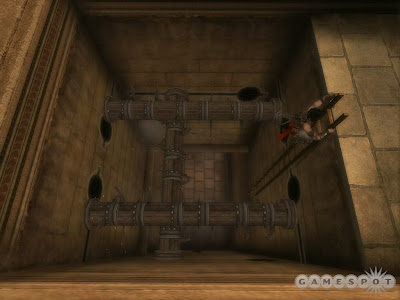
>> The goals of every game are important to establish early on in the design stage, so that levels can be constructed appropriately around them; players might struggle against advancement to reach a higher level, or puzzle-solving as demonstrated by the sequence where the Prince must set up the palace defense systems in SoT by pulling the right levers as hinted at in the diagram etched into a nearby wall. Exploration is a major part of every LoZ game, in which Link must travel back and forth between the richly detailed lands of the Hylians, Gorons, Zora, and Gerudos to retrieve essential objects and complete tasks. Conflict or combat between characters is frequent in both games, whether it be against a major enemy like a troll or griffon in PoP WW, or the smaller poes and skeletal dogs that harass Link whenever he travels accross Hyrule Feild at night.

Games can be categorized into three major themes relating to balance, and can strive for and encourage destruction, maintenance where the goal is to keep the game world constant, and restoration in the case of PoP and Twilight Princess, where it seems the player is ultimately supposed to move the world back to equilibrium.
>> Level design, which includes the creation of environments, scenarios, or missions for the player to complete should be immersive and help establish the mood or feel of the game. These 3D environments should be based on the intended goal of the level, the flow or progression the player takes through it, and the duration of time the player spends within the level before they lose interest.
> The beautiful environments of both games certainly succeed in creating the sense that the player has entered another world, masterfully integrating level function with impressive visuals; both handle flow well, keeping the player involved in the level for a long enough time to have gained the fullest experience from it, while making it just hard enough to get to the next stage or setting to provide a challenge that doesn't seem hopeless. Locked doors in dungeons or natural barriers that can only be removed by weapons acquired later keep Link from gaining access to every available area at once, while semi-linear environments in SoT and set time-travel portal locations in WW keep the Prince from accessing more than a few areas at a time. Link can access some areas only in his wolf form, while he can perform other platforming actions once he has switched back to being a human. Similarly, the Warrior Within Prince can access different areas based on whether he is currently existing in the past, the present, as himself or as the Sand Wraith, the alternate identity he adopts later to set the timeline straight. Sometimes, new levels will even be unveiled as a result of uncontrolled actions your character takes during cutscenes. Overall, the levels are well related and flow smoothly into one another unlike an arcade game’s levels might and integrate well with the larger plotline of the game.

> The duration of the levels in both games is often enough to explore the vast environments if you want to spend your time that way, although they offer the option to go through quicker, completing the platforming sequences and traps along the way. Twilight Princess offers greater level availability, since you can usually warp to another area of the map, while in PoP you usually have to get somewhere by on foot, even if you’ve already been there before.
> The space of each level or setting includes the physical components such as perspective, scale, terrain, objects, and structures. Both employ an isometric view that is ideal for the action/adventure genre and allows the player to see their character and environment in 3rd person, with the useful additions of an adjustable camera angle and a first person view to examine specific things closer.
> Both also utilize textured terrains, materials, and lighting to create a convincing environment, although PoP levels have more realism while the Twilight Princess visuals are a bit more stylized. PoP environments expertly blend ruins, columns, curtains, ledges, ladders, and platforms for the Prince to navigate through, and even the faded color schemes of the scenery create an ancient, majestic feel in SoT or TTT, while WW takes on a darker mood with sandy yellows, deep blues, and bloody reds. TP is more notable for its use of sprawling space and imaginative constructs to differentiate between the many geographic features and cultures found within the game, easily observed for example when comparing the organic, disorderly Forest Temple and the more linear, man-made Goron mines.
> Both series also incorporate game boundaries well, hindering the player's progression through the world or levels by what appear to be unenterable buildings, natural walls, mountains, or cliffs, although some areas or passageways circle back to previous ones.
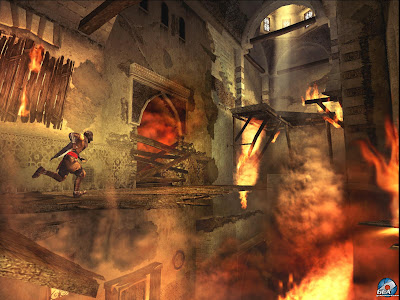
> Game difficulty, which is instrumental in determining a balance between ease and challenge for the player, can progress in a variety of ways: While most games seem to be linear, steadily increasing in difficulty as the game goes on, they can also be flat, where the difficultly doesn’t really change, or graph like an s-curve, where the difficulty that begins and ends similarly, with rising difficulty in between.
PoP and Zelda seem to successfully follow the s-curve model, starting out rather simply as the player learns the basics through in game tutorials. Once you’ve acquired the initial skills used to play the game, the difficulty of each progressive challenge changes, although it seems to steadily increase overall by introducing harder obstacle courses, smaller time limits, and bigger bosses to overcome; the Prince is later pitted against deadlier traps and bigger sand creatures, while Link finds himself face to face with more involving dungeons and particularly hard monsters to defeat, such as the giant eel in the Water Temple. There does seem to come a point where the difficulty doesn’t change much any more, at least until it's time for the final boss battle.
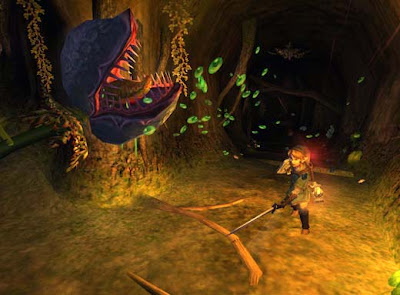
> Time is another element to be considered in level design, as it will affect the player's experience and may contribute to or detract from the ease of gameplay. Authentic time is used as a gameplay characteristic in Zelda especially, since if you stay in an area for long enough, it will shift from day to night, and then back to day again regardless of what you’re doing. This is important because Link can do different things or talk to different people depending on what time of day it is.
Conversely, PoP naturally incorporates a sense of altered time- As long as you remain within a level, no real time seems to have passed until you complete your objective and move to the next one, with the exception of a timed sequence where the Prince might be required to outrun a collapse of the ground beneath him, race to perform a series of specific platforming maneuvers to escape timed traps, or reach a gate before it closes. The Prince can utilize the Sands to his advantage though, harnessing their power to actually change time around him by rewinding to a previous moment to correct a mistake, slow down time for his enemies, or momentarily freeze time altogether to destroy them in quick succession.
>> All games should have clearly defined victory conditions so players know how they can win, as well as loss conditions which stipulate the condition of failure on the player's part. While the Prince of Persia series and Twilight Princess have a more vaguely defined win condition of setting each tumultuous world back to normal as alluded to by their plots, each level or stage is also defined by a series of quests, challenges, and subquests that must be completed in order to move on. Similarly, implicit loss conditions determine how one loses because they're not the first to win, while explicit loss occurs when a character dies from losing health or failing their objective; being single-player games, Twilight Princess and PoP generally employ explicit loss conditions, ending the game when the protagonist dies, or even if an ally dies in the case of defending Farah in SoT.

>> Challenges are a must of any game, which provide the player entertained with some obstacle to overcome or skill to master. Implicit challenges are intentional and immediate, such as the platforming and fighting involved in PoP and LoZ- The Prince is required to evade deadly traps for which reaction time is key, fight enemies by linking complex moves together, and platform across gaps, ledges, and walls. Link faces many of the same challenges, but also has to find the keys to locked doors in dungeons or sometimes compete in mini in-game competitions. Explicit challenges are emergent in the game, such as navigating dungeons in LoZ or finding your way through the complex, non-linear environments of PoP WW using spatial awareness.
Intrinsic knowledge is gained within the game world to help the player along the way, such as or learning how to use different weapons to throw switches or kill enemies in LoZ, or discovering where you are able to travel through time (in WW) or what specific combos work best on which enemies in PoP. Extrinsic knowledge conversely, is gained outside the game world, such as automatically guessing you might be able to explode a weak looking structure with a bomb or light a torch with a lantern in LoZ, or guessing you might be able to break through a cracked wall in PoP.

>> The goals of every game are important to establish early on in the design stage, so that levels can be constructed appropriately around them; players might struggle against advancement to reach a higher level, or puzzle-solving as demonstrated by the sequence where the Prince must set up the palace defense systems in SoT by pulling the right levers as hinted at in the diagram etched into a nearby wall. Exploration is a major part of every LoZ game, in which Link must travel back and forth between the richly detailed lands of the Hylians, Gorons, Zora, and Gerudos to retrieve essential objects and complete tasks. Conflict or combat between characters is frequent in both games, whether it be against a major enemy like a troll or griffon in PoP WW, or the smaller poes and skeletal dogs that harass Link whenever he travels accross Hyrule Feild at night.

Games can be categorized into three major themes relating to balance, and can strive for and encourage destruction, maintenance where the goal is to keep the game world constant, and restoration in the case of PoP and Twilight Princess, where it seems the player is ultimately supposed to move the world back to equilibrium.
>> Level design, which includes the creation of environments, scenarios, or missions for the player to complete should be immersive and help establish the mood or feel of the game. These 3D environments should be based on the intended goal of the level, the flow or progression the player takes through it, and the duration of time the player spends within the level before they lose interest.
> The beautiful environments of both games certainly succeed in creating the sense that the player has entered another world, masterfully integrating level function with impressive visuals; both handle flow well, keeping the player involved in the level for a long enough time to have gained the fullest experience from it, while making it just hard enough to get to the next stage or setting to provide a challenge that doesn't seem hopeless. Locked doors in dungeons or natural barriers that can only be removed by weapons acquired later keep Link from gaining access to every available area at once, while semi-linear environments in SoT and set time-travel portal locations in WW keep the Prince from accessing more than a few areas at a time. Link can access some areas only in his wolf form, while he can perform other platforming actions once he has switched back to being a human. Similarly, the Warrior Within Prince can access different areas based on whether he is currently existing in the past, the present, as himself or as the Sand Wraith, the alternate identity he adopts later to set the timeline straight. Sometimes, new levels will even be unveiled as a result of uncontrolled actions your character takes during cutscenes. Overall, the levels are well related and flow smoothly into one another unlike an arcade game’s levels might and integrate well with the larger plotline of the game.

> The duration of the levels in both games is often enough to explore the vast environments if you want to spend your time that way, although they offer the option to go through quicker, completing the platforming sequences and traps along the way. Twilight Princess offers greater level availability, since you can usually warp to another area of the map, while in PoP you usually have to get somewhere by on foot, even if you’ve already been there before.
> The space of each level or setting includes the physical components such as perspective, scale, terrain, objects, and structures. Both employ an isometric view that is ideal for the action/adventure genre and allows the player to see their character and environment in 3rd person, with the useful additions of an adjustable camera angle and a first person view to examine specific things closer.
> Both also utilize textured terrains, materials, and lighting to create a convincing environment, although PoP levels have more realism while the Twilight Princess visuals are a bit more stylized. PoP environments expertly blend ruins, columns, curtains, ledges, ladders, and platforms for the Prince to navigate through, and even the faded color schemes of the scenery create an ancient, majestic feel in SoT or TTT, while WW takes on a darker mood with sandy yellows, deep blues, and bloody reds. TP is more notable for its use of sprawling space and imaginative constructs to differentiate between the many geographic features and cultures found within the game, easily observed for example when comparing the organic, disorderly Forest Temple and the more linear, man-made Goron mines.
> Both series also incorporate game boundaries well, hindering the player's progression through the world or levels by what appear to be unenterable buildings, natural walls, mountains, or cliffs, although some areas or passageways circle back to previous ones.

> Game difficulty, which is instrumental in determining a balance between ease and challenge for the player, can progress in a variety of ways: While most games seem to be linear, steadily increasing in difficulty as the game goes on, they can also be flat, where the difficultly doesn’t really change, or graph like an s-curve, where the difficulty that begins and ends similarly, with rising difficulty in between.
PoP and Zelda seem to successfully follow the s-curve model, starting out rather simply as the player learns the basics through in game tutorials. Once you’ve acquired the initial skills used to play the game, the difficulty of each progressive challenge changes, although it seems to steadily increase overall by introducing harder obstacle courses, smaller time limits, and bigger bosses to overcome; the Prince is later pitted against deadlier traps and bigger sand creatures, while Link finds himself face to face with more involving dungeons and particularly hard monsters to defeat, such as the giant eel in the Water Temple. There does seem to come a point where the difficulty doesn’t change much any more, at least until it's time for the final boss battle.

> Time is another element to be considered in level design, as it will affect the player's experience and may contribute to or detract from the ease of gameplay. Authentic time is used as a gameplay characteristic in Zelda especially, since if you stay in an area for long enough, it will shift from day to night, and then back to day again regardless of what you’re doing. This is important because Link can do different things or talk to different people depending on what time of day it is.
Conversely, PoP naturally incorporates a sense of altered time- As long as you remain within a level, no real time seems to have passed until you complete your objective and move to the next one, with the exception of a timed sequence where the Prince might be required to outrun a collapse of the ground beneath him, race to perform a series of specific platforming maneuvers to escape timed traps, or reach a gate before it closes. The Prince can utilize the Sands to his advantage though, harnessing their power to actually change time around him by rewinding to a previous moment to correct a mistake, slow down time for his enemies, or momentarily freeze time altogether to destroy them in quick succession.
Sunday, March 1, 2009
Game Essentials: Interface
Another component of a well-designed game is the interface, which should provide the player with a usable connection that allows for all the possible interactions in gameplay, visually reflect the game's story, characters, and even the game's world to help create the most immersive play experience possible for the largest audience.
The 3 Prince of Persia games, played on the Playstation 2 system, employ a console that includes 4 action buttons, triggers, and 2 analog sticks to provide a compact, handheld interface ideal for quick button mashing and performing complex platforming sequences. The Legend of Zelda: Twilight Princess works a bit differently, as the motion-sensing Wii remote and nunchuck are manual interfaces that allow the player to interact through physical motion and more actual movement; since Twlight Princess demands the player master many different tools and weapons as oppose to simply pressing buttons to create combos, the Wii interface is well suited for pointing at the screen to aim an arrow or boomerang, directional swordplay with a slash of the wiimote, or casting a fishing line with a throwing motion. Controllers for both systems come with a few interesting additional features designed to make the gameplay a richer experience for the player, such as the sounds that come from the wiimote itself, or the vibration felt in the PS2 controller when the Prince gets hit, falls from a considerable height, or comes into contact with a wall when platforming.
Onscreen visual displays are another essential to any game, as they give the player vital feedback and information about the status of their gameplay so that they can react accordingly. Examples of an active interface would be PoP's combos lists as well as LoZ's menu screens, pause screens, save screens, a full screen map and inventory where the player is able to track their position in Hyrule, read mail, equip objects and weapons, or even change Link's green tunic to a Zora one so he can stay indefinitely underwater (still not exactly sure how the physics work out on that one).
Passive interfaces which cannot be directly manipulated by the player act more as indicators, such as Link's hearts which show you how much life he has left, or the Prince's blue health bar in Sands of Time. Twilight Princess includes a map in the bottom left hand corner, a helpful addition to navigating the game's vast explorable environments and multi-leveled dungeons. Also shown here is the player's immediate inventory for reference, which the player can select different items from using the directional pad in order to quickly whip out an empty bottle to capture a fairy, a lantern to light the dark, or switch between their bow, slingshot, or boomerang as a secondary weapon.

Sands of Time also includes a vertical display of the amount of Sand the Prince has off to the left, while the same indicators have been compacted into a less-distracting circular display in the top left hand corner of the screen in Warrior Within and The Two Thrones. Sometimes other health indicators will appear, such as Farah's bow-shaped life meter when you haven't been defending her properly in SoT, or a boss monster's remaining health bar in WW. The simplicity of this display is perfect for high-paced action games since the player cannot devote much time to reading any sort of complex interface, and the unobtrusiveness of it allows for a better view of the games' beautiful environments and awesome effects.

Both games are also moderately accessible, still playable by those with slight visual disabilities or hearing impairments. While Twilight Princess includes audio cues such as the rather annoying beeping that sounds when Link's health level drops to a few hearts, they are not necessary to play the game, as most of these indications also include a visual or text-based accompaniment. In The Two Thrones, the Prince must sometimes perform a stealth attack at the right time, although his dagger provides a visual cue by flashing noticeably a split second before the player must press the appropriate button to execute the move. Since no one really ever talks in the LoZ games, all the dialogue appears at the bottom of the screen, so deaf players would have no trouble understanding the plot of the game or spoken hints to Link's quest. The PoP trilogy is outfitted with enriching voice acting, although it comes with optional subtitles as well as other visual customizations and volume adjustments in the options menu (setting the slow-motion cam in Warrior Within to OFTEN is a rather WIN idea.)
Both games also allow the player to save their progress, a must-have for any extensive game not bound by set levels or stages (not being able to save in old school action/adventure games was rather suicide-conducive). Twilight Princess conveniently allows the player to save at their leisure by simply bringing up their inventory screen any time they wish; this is particularly useful in a game as vast and content-filled as that, since the player is likely running back and forth from place to place exploring and completing subquests. Even in the event the player forgets to save, there are a a few instances after major cutscenes where Twilight Princess promts the player to save and does so automatically if you choose YES. Saving in PoP is less convenient, although also less compromising to the game's immersiveness, since the player has the option of saving their game at consistantly recognizable components of the environment itself- Saving in SoT occurs at glowing sand clouds that appear after battles or in strategicaly placed areas, while the player saves and regenerates health when they drink from numerous water fountains that seamlessly merge with the scenery in WW or TTT (Who knows...maybe it's holy water?)
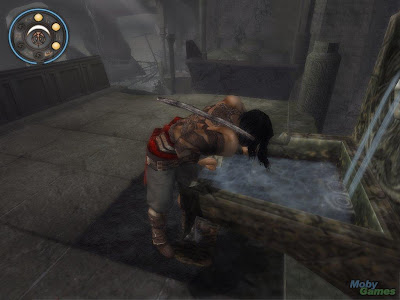
Both games also give the player the option of retrying the last boss battle or returning to the last checkpoint, even after flashing an ominous GAME OVER message, which lessens the consequences of repeated failure and therefore general frustration. All in all, both games have a well-designed, functional interface that's easy enough to use for each respective genre and still compromises little in the way of immersiveness.
The 3 Prince of Persia games, played on the Playstation 2 system, employ a console that includes 4 action buttons, triggers, and 2 analog sticks to provide a compact, handheld interface ideal for quick button mashing and performing complex platforming sequences. The Legend of Zelda: Twilight Princess works a bit differently, as the motion-sensing Wii remote and nunchuck are manual interfaces that allow the player to interact through physical motion and more actual movement; since Twlight Princess demands the player master many different tools and weapons as oppose to simply pressing buttons to create combos, the Wii interface is well suited for pointing at the screen to aim an arrow or boomerang, directional swordplay with a slash of the wiimote, or casting a fishing line with a throwing motion. Controllers for both systems come with a few interesting additional features designed to make the gameplay a richer experience for the player, such as the sounds that come from the wiimote itself, or the vibration felt in the PS2 controller when the Prince gets hit, falls from a considerable height, or comes into contact with a wall when platforming.
Onscreen visual displays are another essential to any game, as they give the player vital feedback and information about the status of their gameplay so that they can react accordingly. Examples of an active interface would be PoP's combos lists as well as LoZ's menu screens, pause screens, save screens, a full screen map and inventory where the player is able to track their position in Hyrule, read mail, equip objects and weapons, or even change Link's green tunic to a Zora one so he can stay indefinitely underwater (still not exactly sure how the physics work out on that one).
Passive interfaces which cannot be directly manipulated by the player act more as indicators, such as Link's hearts which show you how much life he has left, or the Prince's blue health bar in Sands of Time. Twilight Princess includes a map in the bottom left hand corner, a helpful addition to navigating the game's vast explorable environments and multi-leveled dungeons. Also shown here is the player's immediate inventory for reference, which the player can select different items from using the directional pad in order to quickly whip out an empty bottle to capture a fairy, a lantern to light the dark, or switch between their bow, slingshot, or boomerang as a secondary weapon.

Sands of Time also includes a vertical display of the amount of Sand the Prince has off to the left, while the same indicators have been compacted into a less-distracting circular display in the top left hand corner of the screen in Warrior Within and The Two Thrones. Sometimes other health indicators will appear, such as Farah's bow-shaped life meter when you haven't been defending her properly in SoT, or a boss monster's remaining health bar in WW. The simplicity of this display is perfect for high-paced action games since the player cannot devote much time to reading any sort of complex interface, and the unobtrusiveness of it allows for a better view of the games' beautiful environments and awesome effects.

Both games are also moderately accessible, still playable by those with slight visual disabilities or hearing impairments. While Twilight Princess includes audio cues such as the rather annoying beeping that sounds when Link's health level drops to a few hearts, they are not necessary to play the game, as most of these indications also include a visual or text-based accompaniment. In The Two Thrones, the Prince must sometimes perform a stealth attack at the right time, although his dagger provides a visual cue by flashing noticeably a split second before the player must press the appropriate button to execute the move. Since no one really ever talks in the LoZ games, all the dialogue appears at the bottom of the screen, so deaf players would have no trouble understanding the plot of the game or spoken hints to Link's quest. The PoP trilogy is outfitted with enriching voice acting, although it comes with optional subtitles as well as other visual customizations and volume adjustments in the options menu (setting the slow-motion cam in Warrior Within to OFTEN is a rather WIN idea.)
Both games also allow the player to save their progress, a must-have for any extensive game not bound by set levels or stages (not being able to save in old school action/adventure games was rather suicide-conducive). Twilight Princess conveniently allows the player to save at their leisure by simply bringing up their inventory screen any time they wish; this is particularly useful in a game as vast and content-filled as that, since the player is likely running back and forth from place to place exploring and completing subquests. Even in the event the player forgets to save, there are a a few instances after major cutscenes where Twilight Princess promts the player to save and does so automatically if you choose YES. Saving in PoP is less convenient, although also less compromising to the game's immersiveness, since the player has the option of saving their game at consistantly recognizable components of the environment itself- Saving in SoT occurs at glowing sand clouds that appear after battles or in strategicaly placed areas, while the player saves and regenerates health when they drink from numerous water fountains that seamlessly merge with the scenery in WW or TTT (Who knows...maybe it's holy water?)

Both games also give the player the option of retrying the last boss battle or returning to the last checkpoint, even after flashing an ominous GAME OVER message, which lessens the consequences of repeated failure and therefore general frustration. All in all, both games have a well-designed, functional interface that's easy enough to use for each respective genre and still compromises little in the way of immersiveness.
Subscribe to:
Posts (Atom)